The Best Resources to Learn Japanese: Complete Guide (2025)
Learning Japanese has never been more accessible. With hundreds of apps, websites, textbooks, and tools available, you have more options than ever before. But here's the problem: too many choices can be paralyzing. Which resources actually work? Which ones are worth your time and money? And how do you combine them effectively without getting overwhelmed?
Introduction: Why Japanese Learning Resources Matter
The right resources can accelerate your Japanese learning by years. The wrong ones can waste months of effort and drain your motivation. After testing dozens of apps, reading countless reviews, and talking to successful learners, we've compiled this comprehensive guide to help you navigate the overwhelming world of Japanese learning resources.
Whether you're a complete beginner starting with hiragana, an intermediate learner preparing for JLPT N3, or an advanced student diving into native literature, this guide will show you exactly which resources to use and how to combine them effectively.
How to Choose the Right Resources for Your Goals
Before diving into specific recommendations, ask yourself:
- What's your goal? JLPT certification, conversational fluency, reading manga, business Japanese, or understanding anime?
- What's your current level? Absolute beginner, false beginner, intermediate, or advanced?
- How much time do you have? 10 minutes daily, 30 minutes, or 2+ hours?
- What's your budget? Free only, moderate ($10-30/month), or unlimited?
- How do you learn best? Visual, auditory, kinesthetic, reading/writing, or a mix?
The Multi-Resource Approach: Why One Tool Isn't Enough
Here's a truth that might disappoint you: no single resource will take you to fluency. Japanese has multiple components—reading, writing, listening, speaking, grammar, vocabulary, and kanji—and no single app or textbook covers everything effectively.
Successful learners use a "resource stack"—a combination of complementary tools that work together. For example:
- An app for daily vocabulary review (Anki)
- A reading platform for immersion (Shinobi Japanese)
- A textbook for structured grammar (Genki)
- A podcast for listening practice (Nihongo Con Teppei)
- A tutor for speaking practice (italki)
Don't worry—you don't need all of these at once. We'll help you build the perfect stack for your level and goals.
What You'll Discover in This Guide:
- The best apps, websites, and tools for every skill level
- Reading-focused resources that teach naturally (featuring Shinobi Japanese)
- Free vs. paid: what's actually worth your money
- How to build your perfect resource stack without overwhelm
- Platform-specific recommendations (iOS, Android, Web)
- Resources for specific goals (JLPT, anime, business, etc.)
1. Understanding Your Japanese Learning Journey
Setting Clear Goals
Your resource choices should align with your goals:
For JLPT Preparation: Focus on structured apps, JLPT-specific books, grammar drills, and practice tests. Resources: Bunpro, Sou Matome series, JLPT Sensei.
For Conversational Fluency: Prioritize speaking practice, listening immersion, and conversational phrases. Resources: italki, JapanesePod101, Pimsleur, HelloTalk.
For Reading (Manga/Novels): Emphasize kanji learning, vocabulary building, and graded readers. Resources: Shinobi Japanese, WaniKani, manga with furigana, reading apps.
For Anime/Pop Culture: Focus on listening comprehension, casual speech, and subtitle tools. Resources: Animelon, Netflix with Language Reactor, anime podcasts.
For Business Japanese: Study formal language, keigo (honorifics), and business etiquette. Resources: Business Japanese textbooks, formal grammar guides, professional tutors.
Assessing Your Current Level
Understanding your level helps you choose appropriate resources:
- Absolute Beginner: Don't know hiragana yet
- Beginner (N5-N4): Know kana, learning basic grammar and kanji
- Intermediate (N3-N2): Can hold simple conversations, reading adapted content
- Advanced (N1+): Reading native materials, nuanced conversations
Different Learning Styles
Choose resources that match how you learn best:
- Visual learners: Apps with images, manga, videos, visual mnemonics
- Auditory learners: Podcasts, audio courses, listening apps
- Reading/writing learners: Textbooks, reading apps, writing practice
- Kinesthetic learners: Handwriting practice, physical flashcards, interactive games
2. Best Apps for Learning Japanese
Reading-Based Apps ⭐
Reading-based learning is the most natural and effective way to acquire Japanese. These apps teach you kanji, vocabulary, and grammar simultaneously through real content.
🥷 Shinobi Japanese Paid
Best for: Natural kanji learning through reading
Level: Beginner to Advanced
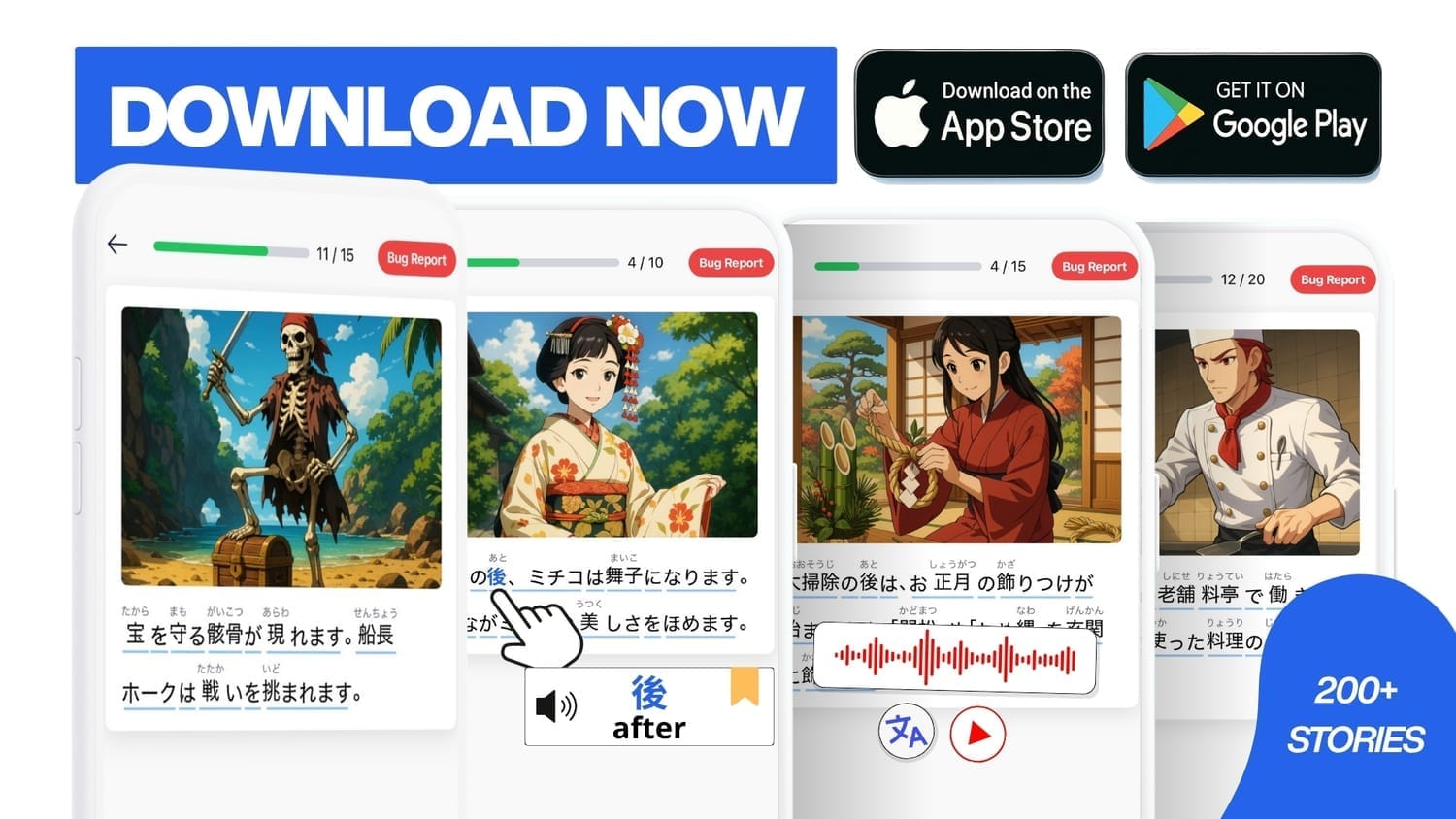
Shinobi Japanese is our top recommendation for anyone serious about learning to read Japanese. Unlike flashcard apps that isolate kanji, Shinobi Japanese teaches through carefully curated reading content where you encounter kanji in their natural context.
Why it's exceptional:
- Learn kanji through actual words and sentences, not isolation
- Curated content at appropriate difficulty levels
- Instant word lookups—tap any word for definitions
- Toggle furigana on/off as you progress
- Builds vocabulary, grammar, and kanji knowledge simultaneously
- Engaging stories and articles you'll actually want to read
- Tracks your kanji exposure and progress automatically
The app follows the principle that you learn best by reading, not by grinding flashcards. You'll see the same kanji used in different words and contexts, which creates stronger, longer-lasting memories. By the time you've read through beginner content, you won't just recognize kanji—you'll understand how to use them in actual Japanese.
Perfect for: Anyone who wants to actually read Japanese, not just memorize characters. Especially valuable for learners who find traditional kanji study boring or ineffective.
Satori Reader Paid
Best for: Intermediate learners ready for stories
Level: High Beginner to Advanced
High-quality Japanese stories with detailed annotations, grammar explanations, and audio by voice actors. You can adjust the difficulty level, and the platform provides excellent explanations for every sentence. Great for transitioning from learner content to native materials.
Todai (NHK News Web Easy) Free
Best for: Reading authentic news in simplified Japanese
Level: Beginner to Intermediate
Free app that provides simplified Japanese news articles with furigana. Updated daily with current events, so you'll never run out of fresh content. Great for building vocabulary in real-world contexts.
WATANOC Free
Best for: Free reading practice with pictures
Level: Beginner to Intermediate
Free web magazine with articles categorized by JLPT level. Features lots of photos to help with comprehension, hover-over definitions, and audio readings. Excellent free alternative for reading practice.
Comprehensive Learning Apps
Renshuu Freemium
Best for: All-in-one self-study platform
Level: All levels
A comprehensive platform offering vocabulary lists, grammar lessons, kanji practice, games, and community features. The free version is generous, and the community is active and helpful. One of the most complete resources available, though the interface can feel overwhelming at first.
- Comprehensive coverage
- Active community
- Generous free tier
- Multiple study methods
- Interface can be complex
- Steep learning curve
- Can feel overwhelming
Duolingo Freemium
Best for: Quick 5-minute daily lessons
Level: Absolute Beginner to Elementary
The most popular language app for a reason—it's free, gamified, and perfect for building daily habits. Great for absolute beginners to get comfortable with hiragana, katakana, and basic vocabulary. However, it's not sufficient as your only resource, especially for speaking practice.
- Completely free
- Gamified and fun
- Builds daily habits
- Good for beginners
- Limited speaking practice
- Not enough depth
- Won't get you to fluency
- Some questionable translations
LingoDeer Paid
Best for: Structured Asian language courses
Level: Beginner to Intermediate
Better than Duolingo for Asian languages. Structured courses with vocabulary lessons, grammar explanations, and contextual dialogues. High-quality audio and clear progression. The structured format can take you from zero to forming your own sentences.
Busuu Freemium
Best for: Speaking-focused lessons
Level: Beginner to Intermediate
Aims to teach Japanese in just 10 minutes per day with a focus on speaking skills. Lessons are quick, practical, and emphasize real conversations. Good for time-crunched learners who want to prioritize speaking.
Kanji & Vocabulary Apps
WaniKani Paid ($9/month)
Best for: Systematic kanji learning with mnemonics
Level: Beginner to Intermediate (start early!)
The number one kanji learning resource, using radicals and mnemonics with built-in spaced repetition. Teaches 2,000+ kanji and 6,000+ vocabulary words. The catch: you can't skip levels, so start early (ideally at N4 reading level or below). It's addictive, community-driven, and highly effective.
Important note: While WaniKani is excellent for systematic kanji study, pairing it with reading-based apps like Shinobi Japanese gives you both structured learning and natural context. This combination is incredibly powerful.
Anki Free
Best for: Customizable SRS flashcards
Level: All levels
The most powerful spaced repetition system available. Completely free and infinitely customizable. Requires setup and deck management, but pre-made decks are available. Best for students who want complete control over their learning.
- Completely free
- Infinitely customizable
- Powerful SRS algorithm
- Huge community
- Requires setup
- Learning curve
- iOS app costs money
- Can be overwhelming
Memrise Freemium
Best for: Visual vocabulary learning
Level: Beginner to Intermediate
Uses images, audio, and video to help you remember vocabulary. User-created courses available for specific vocabulary lists. The visual approach works well for memorizing words, though it's primarily vocabulary-focused rather than comprehensive.
Obenkyo Free (Android)
Best for: Comprehensive reference app
Level: All levels
Android-only app that's incredibly comprehensive. Includes kanji, vocabulary, grammar, particles, and counters. Great as a reference tool and for creating custom study materials. Not quiz-heavy but excellent for independent learners.
JA Sensei Freemium
Best for: Complete study suite
Level: All levels
Learn kana, kanji, vocabulary, and grammar. Includes quizzes, conjugation charts, and audio clips. Very thorough with lots of content, though the free version is somewhat limited.
Speaking & Listening Apps
Pimsleur Paid
Best for: Audio-based immersion
Level: Beginner to Intermediate
One of the longest-standing audio language courses. Fully structured 30-minute audio lessons that build listening and speaking skills through immersive, hands-free learning. Perfect for commuters and auditory learners. Expensive but highly effective for developing conversational ability.
JapanesePod101 Freemium
Best for: Podcast-style lessons
Level: All levels
Massive library of audio and video lessons, transcripts, lesson notes, and vocabulary lists. Quality lessons for all levels, though advanced content isn't quite as strong. Great for listening practice but not sufficient as your only resource. Premium membership includes access to tutors.
Speechling Freemium
Best for: Pronunciation practice with native feedback
Level: Beginner to Advanced
Practice speaking by recording yourself and comparing to native speakers. Free tier offers unlimited practice; paid tier includes feedback from native speakers. Excellent for perfecting pronunciation and prosody.
italki Paid (per lesson)
Best for: 1-on-1 lessons with tutors
Level: All levels
Connect with native Japanese tutors for video lessons. Choose between professional teachers and community tutors at various price points ($8-30+ per hour). Essential for developing speaking skills and getting personalized feedback. Book trial lessons to find the right tutor for you.
Grammar Apps
Tae Kim's Guide to Learning Japanese Free
Best for: Logical grammar explanations
Level: Beginner to Advanced
Mobile version of the renowned online grammar guide. Teaches grammar in an intuitive, logical way from basic principles to advanced concepts. Clear explanations, practical examples, and well-organized. Essential free resource for understanding Japanese grammar structure.
Bunpro Paid
Best for: SRS for grammar patterns
Level: All levels (organized by JLPT)
Applies spaced repetition to grammar study. Organized by JLPT level with clear explanations and example sentences. Fill-in-the-blank exercises reinforce grammar patterns. Excellent for JLPT preparation and systematic grammar study.
Human Japanese Paid (one-time)
Best for: Interactive textbook approach
Level: Beginner to Early Intermediate
Created by a dedicated small team, this app is essentially an interactive textbook. Extremely thorough with explanations for everything. Engaging, personable writing style. Animated writing instructions with stroke order. Lacks quizzes and practice activities, so pair it with other resources.
Our App Recommendations by Goal:
- For natural learning: Shinobi Japanese + Anki + italki
- For systematic study: WaniKani + Bunpro + Genki textbook
- For time-crunched learners: Duolingo + Pimsleur + JapanesePod101
- For budget learners: Anki + Tae Kim's Guide + NHK News Web Easy + Renshuu
- For reading focus: Shinobi Japanese + WaniKani + Satori Reader
3. Essential Websites and Online Resources
Dictionaries and Reference
Jisho.org Free
The Japanese-English dictionary. Search kanji, words, sentences, and more. Shows stroke order, example sentences, and related words. Add asterisks (*大*) to search for all words containing a kanji. Absolutely essential—bookmark this immediately.
NihongoDera Free
Multi-tool dictionary platform with "Word of the Day," converters for kana/romaji, and an amazing Text Analyzer that breaks down up to 10,000 characters and explains every word. Fantastic for analyzing difficult texts.
Tangorin Free
Alternative dictionary with kanji breakdown, stroke diagrams, and example sentences. Good backup when Jisho doesn't have what you need.
Weblio Free
Japanese-Japanese dictionary. Essential for advanced learners who want to understand nuances and see how natives define words. All in Japanese, so recommended for intermediate+ learners.
Reading Practice Websites
NHK News Web Easy Free
Simplified news in easy Japanese with furigana (toggleable). Updated daily with current events. One of the best free resources for intermediate reading practice.
Hukumusume Free
Japanese children's stories with audio. Great for beginners and elementary learners. Stories are short, simple, and culturally interesting.
Syosetu (小説家になろう) Free
Japanese web novel platform where amateur authors publish stories. Huge variety of genres. Advanced resource for when you're ready for native content. Use browser extensions like Yomitan for assistance.
BookWalker Paid
Digital bookstore for manga, light novels, and books in Japanese. Frequently has sales and free chapters. Official source for legal digital manga reading.
Grammar Resources
Imabi Free
Extremely comprehensive online grammar guide. Covers everything from beginner to advanced, including classical Japanese. Dense but thorough. Great reference when you need detailed explanations.
Japanese Ammo with Misa (YouTube) Free
Engaging video grammar lessons by a native speaker. Covers JLPT N5-N1 grammar, common mistakes, and cultural notes. Misa's teaching style is clear, fun, and highly effective.
Maggie Sensei Free
Website explaining casual Japanese, slang, idioms, and grammar points with cute dog illustrations. Great for understanding real conversational Japanese beyond textbook language.
Community and Forums
r/LearnJapanese (Reddit) Free
Active community of learners. Great for questions, resource recommendations, and motivation. Check the sidebar for comprehensive resource lists and guides.
WaniKani Community Forums Free
Helpful community even if you don't use WaniKani. The Ultimate Resources List is maintained here and incredibly comprehensive.
HiNative Freemium
Ask native speakers questions about Japanese. Quick answers to specific questions about usage, nuance, and naturalness. Free tier is generous.
HelloTalk Freemium
Language exchange app connecting you with native Japanese speakers learning English. Text, voice, and video chat available. Great for making friends and practicing conversation.
4. Browser Extensions and Tools
Browser extensions transform your web browsing into Japanese learning opportunities. These tools let you read native content with instant definitions.
Yomitan Free
For: Chrome, Firefox, Edge
Pop-up dictionary that shows definitions when you hover over Japanese text. Displays meanings, readings, pitch accent, and lets you create Anki flashcards instantly. Must download and import dictionaries separately. Essential tool for reading Japanese websites.
Yomikiri Free (iOS)
For: Safari on iPhone/iPad
Similar to Yomitan but for Safari on iOS. Tap words for instant definitions while browsing. Game-changer for reading Japanese on mobile devices.
Language Reactor Freemium
For: Netflix and YouTube
Adds bilingual subtitles to Netflix and YouTube, allowing you to see Japanese and English simultaneously. Click words for definitions. Save vocabulary. Adjust playback speed. Transform entertainment into learning.
10ten Japanese Reader Free
For: Chrome, Firefox
Another pop-up dictionary option. Shows kanji information, word definitions, and name lookups. Simpler than Yomitan but works right out of the box.
5. Traditional Learning Materials
Textbooks
Genki I & II Paid (~$60 each)
Level: Beginner (N5-N4)
The classic textbook series for a reason. Structured, comprehensive, with English explanations throughout. Covers basic grammar and vocabulary for the first 1-2 years of study. Widely used, so finding supplementary resources and tutors who teach from Genki is easy. Get the workbooks too for extra practice.
Note: Focuses somewhat on student life vocabulary. Not ideal if you're not a student, but still the gold standard for beginners.
Minna no Nihongo Paid
Level: Beginner to Intermediate
Popular in language schools. Teaches entirely in Japanese (with separate translation booklets available). More challenging but forces immersion from the start. Well-structured with lots of practice materials.
Japanese From Zero Paid
Level: Absolute Beginner
Self-study friendly textbook series. Teaches hiragana and katakana gradually while introducing grammar. Comes with video lessons. Good for absolute beginners studying alone.
Tobira Paid
Level: Intermediate (N3-N2)
Gateway textbook for intermediate learners. Focuses on practical communication and cultural knowledge. All Japanese with minimal English support. Chapters organized by theme (health, environment, etc.).
Reference Books
A Dictionary of Japanese Grammar (Basic, Intermediate, Advanced) Paid (~$40 each)
The holy grail of Japanese grammar references. Three volumes covering every grammar point you'll ever need. Clear explanations, example sentences, and usage notes. Expensive but worth every penny. Essential for serious learners.
Kodansha Kanji Learner's Course Paid
Comprehensive kanji textbook with 2,300 kanji organized by usefulness and visual similarity. Includes readings, vocabulary, and mnemonics. Good alternative to app-based kanji learning.
Remembering the Kanji (Heisig) Paid
Famous method teaching 2,200 kanji meanings through imaginative stories. Doesn't teach readings. Best paired with vocabulary study. Controversial but effective for many learners.
Sou Matome JLPT Series Paid
JLPT preparation books organized by level and skill (grammar, vocabulary, reading, listening, kanji). Study plans spread over 6-8 weeks. Excellent for focused test prep.
6. YouTube Channels for Japanese Learning
Comprehensible Japanese Free
Videos based on comprehensible input method. Entirely in Japanese but designed for understanding through context, gestures, and visuals. Excellent for developing listening skills naturally.
Japanese Ammo with Misa Free
Fun, engaging grammar lessons covering N5-N1. Misa explains complex concepts clearly with lots of examples. Also covers common mistakes and cultural notes.
Dogen Freemium
Focuses on pitch accent—the biggest thing most textbooks ignore. Mix of comedy skits and serious pronunciation lessons. Paid Patreon course goes deeper. Essential for developing natural-sounding Japanese.
Game Gengo Free
Learn Japanese through video games. Plays Japanese games while explaining grammar and vocabulary. Perfect for gaming enthusiasts.
Nihongo no Mori Free
All JLPT levels covered. Lessons entirely in Japanese. Native teachers explain grammar, vocabulary, and test strategies. Professional quality content.
That Japanese Man Yuta Free
Street interviews with Japanese people on various topics. Learn real, conversational Japanese and cultural perspectives. Narrated in English with Japanese interviews.
Onomappu Free
Native speaker discusses learning Japanese, culture, and onomatopoeia. Choice of subtitle languages. Casual, natural speaking style great for listening practice.
7. Podcasts for Japanese Learners
Nihongo Con Teppei Free
Level: Beginner (N4)
Teppei talks about everyday topics using simple Japanese. 11-minute episodes perfect for quick listening practice. Speaks clearly and slowly. Ideal for beginners building listening comprehension.
Bilingual News Free
Level: Intermediate to Advanced
Hosted by an English and Japanese speaker who each speak in their native language. Discuss interesting news and cultural topics. Great for training your ear to switch between languages.
Learn Japanese Pod Freemium
Level: All levels
Lessons for all levels with transcripts and explanations. Natural conversational speed. Good supplement to structured study.
Hapa Eikaiwa Free
Level: Intermediate+
Aimed at Japanese learners of English, but excellent listening practice. Bilingual host translates English conversations into Japanese.
Rebuild.fm Free
Level: Advanced
Tech podcast entirely in Japanese. 1-2 hour unstructured conversations about recent issues in technology. For advanced learners ready for native content.
8. Immersion Resources
Anime and Drama
Netflix with Language Reactor Paid
Watch Japanese shows with bilingual subtitles. Pause and replay easily. Save vocabulary. The best way to turn entertainment into learning.
Animelon Free
Watch anime with Japanese subtitles, romaji, or English. Toggle between subtitle modes. Great free resource for anime fans.
Crunchyroll Paid
Massive anime library. Some shows have Japanese subtitles available. Essential for anime immersion.
Manga and Reading
BookWalker Paid
Official digital manga store. Frequent sales and free first chapters. Legal way to read Japanese manga.
Manga Planet Freemium
Some manga with English translations displayed alongside Japanese. Good for beginners who need translation support.
Comic Walker Free
Free manga online in Japanese. Updated regularly with new chapters. Great for intermediate+ readers.
Games
Pokemon Games in Japanese: Excellent for learners. Simple language, lots of repetition, and you probably already know the story. Available on Nintendo Switch.
Animal Crossing in Japanese: Slice-of-life game with lots of daily conversations. Great for casual Japanese practice.
Visual Novels: Story-heavy games with lots of text. Can be challenging but excellent reading practice. Start with games you've already played in English.
Music and Lyrics
LyricsTraining Free
Fill-in-the-blank game using song lyrics. Makes learning vocabulary through music interactive and fun.
UtaNet Free
Japanese lyrics database. Search for your favorite J-pop songs and follow along while listening.
9. Speaking Practice Resources
italki Paid ($8-30+/hour)
The best platform for finding Japanese tutors. Choose between professional teachers and community tutors. Book trial lessons to find your perfect match. Essential for developing speaking skills.
Preply Paid
Similar to italki with native Japanese tutors. Flexible scheduling and various price points.
HelloTalk Freemium
Language exchange app. Connect with native Japanese speakers learning English. Text, voice, and video chat. Built-in translation and correction features.
Tandem Freemium
Another language exchange platform. Video calls and text chat. Large community of Japanese learners and natives.
Discord Servers: Many Japanese learning Discord servers offer voice channels for conversation practice. Search for "Japanese learning Discord" to find active communities.
Japanese Conversation Cafes: Check for online or local conversation meetups. Many cities have Japanese conversation groups where learners and natives meet to chat.
10. JLPT Test Preparation Resources
Official JLPT Website Free
Official sample tests and information. Download past exam samples to understand the format.
JLPT Sensei Free
Practice questions by level. Grammar lists, vocabulary lists, and mock tests. Excellent free resource for test prep.
Japanese Test 4 You Free
Full-length practice tests for all JLPT levels. Great for simulating test conditions.
Sou Matome Series Paid
Study books covering all JLPT skills. 6-8 week study plans. Well-organized and comprehensive.
Shin Kanzen Master Series Paid
More in-depth than Sou Matome. Thorough coverage of each skill area. Excellent for serious test preparation.
11. Free vs. Paid: What's Worth Your Money?
Best Completely Free Resources
- Anki - Powerful SRS (iOS costs money)
- Tae Kim's Guide - Complete grammar guide
- NHK News Web Easy - Daily reading practice
- Jisho.org - Essential dictionary
- Renshuu - Generous free tier
- Duolingo - Daily lessons (with ads)
- YouTube channels - Countless free lessons
- Podcasts - Free listening practice
- r/LearnJapanese - Community support
Freemium Options Worth Upgrading
- Renshuu - Free is good, premium adds polish
- HelloTalk - Upgrade for unlimited translations
- JapanesePod101 - Premium gives full library access
Premium Resources That Justify the Cost
- Shinobi Japanese - Natural reading-based learning
- italki tutors - Essential for speaking practice
- WaniKani - Systematic kanji mastery
- Genki textbooks - One-time purchase, years of use
- Dictionary of Japanese Grammar - Lifetime reference
- Pimsleur - Effective audio immersion
Budget-Friendly Learning Path ($0-20/month):
Core: Shinobi Japanese ($10-15/month) + Free resources (Anki, Tae Kim, NHK News, YouTube, podcasts)
This gives you structured reading practice plus comprehensive free support.
Premium All-Access Path ($50-100/month):
Shinobi Japanese + WaniKani + italki (2-4 lessons/month) + Bunpro + streaming services
Covers all bases: reading, kanji, speaking, grammar, and immersion.
12. Building Your Perfect Resource Stack
The Beginner Stack (N5-N4)
Goal: Learn hiragana, katakana, basic grammar, and 300-500 kanji
- Primary: Genki I textbook + Shinobi Japanese (beginner content)
- Kanji: WaniKani (start early!) or Anki
- Practice: Duolingo or Renshuu for daily drills
- Grammar: Tae Kim's Guide for reference
- Listening: JapanesePod101 or Nihongo Con Teppei
- Speaking: HelloTalk for text exchange
- Dictionary: Jisho.org
The Intermediate Stack (N3-N2)
Goal: Conversational fluency, 1000+ kanji, reading adapted content
- Primary: Shinobi Japanese (intermediate content) + Tobira textbook
- Kanji: Continue WaniKani or switch to reading-only
- Grammar: Bunpro + Dictionary of Japanese Grammar
- Reading: NHK News Web Easy + Satori Reader + manga
- Listening: Bilingual News podcast + YouTube channels
- Speaking: italki tutors (2-4x/month minimum)
- Immersion: Anime/drama with Japanese subs
The Advanced Stack (N1+)
Goal: Native-level content, nuanced communication, 2000+ kanji
- Primary: Native content (novels, news, podcasts)
- Reading: Japanese novels, Syosetu web novels, newspapers
- Grammar: Dictionary of Japanese Grammar (Advanced)
- Listening: Native podcasts, YouTube, TV shows without subtitles
- Speaking: Regular italki lessons + language exchange
- Vocabulary: Anki with sentences from native content
- Tools: Yomitan for browser reading
The Budget Learner's Stack ($0-10/month)
- Anki (free SRS)
- Tae Kim's Guide (free grammar)
- NHK News Web Easy (free reading)
- Renshuu free tier (all-in-one practice)
- YouTube channels (free lessons)
- Duolingo (free with ads)
- HelloTalk (free language exchange)
- Library books (borrow Genki if available)
The Reading-Focused Stack ⭐
For learners who want to prioritize reading ability:
- Core: Shinobi Japanese (reading-first natural learning)
- Kanji support: WaniKani or Anki (for systematic review)
- Progression: NHK News Easy → Satori Reader → Native content
- Tools: Yomitan browser extension for web reading
- Immersion: Manga with furigana → Manga without → Light novels → Novels
- Grammar reference: Tae Kim or Dictionary of Japanese Grammar
This stack prioritizes reading comprehension while building all other skills naturally through context.
13. How to Use Resources Effectively
The 80/20 Rule: Focus on What Works
Not all resources are equally valuable. 20% of your resources will give you 80% of your results. For most learners, this means:
- Core daily activity: Reading practice (Shinobi Japanese, manga, articles)
- Supporting activity: Vocabulary review (Anki, WaniKani)
- Weekly activity: Speaking practice (italki, language exchange)
- As-needed: Grammar reference, dictionary lookups
Creating a Study Schedule
Sample 30-minute daily routine:
- 10 min: Vocabulary review (Anki/WaniKani)
- 15 min: Reading practice (Shinobi Japanese)
- 5 min: Listening (podcast during break)
Sample 60-minute daily routine:
- 15 min: Vocabulary review
- 25 min: Reading practice
- 10 min: Grammar study (when needed)
- 10 min: Listening practice
Weekly additions:
- 1-2x italki lessons (30-60 min each)
- 2-3x immersion (anime, YouTube, manga)
- 1x conversation exchange (HelloTalk)
Avoiding Resource Overload
Warning Signs You're Using Too Many Resources:
- You spend more time researching resources than studying
- You have 10+ apps installed but use none consistently
- You keep switching resources every week
- You feel overwhelmed before you even start
- Your reviews pile up across multiple platforms
Solution: The 3-Resource Rule
Limit yourself to 3 core resources at a time:
- One comprehensive resource (app or textbook)
- One vocabulary/kanji tool
- One immersion source (reading, listening, or speaking)
Example: Shinobi Japanese + WaniKani + italki
Example: Genki textbook + Anki + Japanese podcasts
When to Switch or Add Resources
Switch when:
- A resource no longer matches your level (you've outgrown it)
- You genuinely dislike it after giving it a fair try (2+ weeks)
- It's causing frustration rather than learning
Add when:
- You've made current resources habitual
- You identify a clear skill gap (e.g., need speaking practice)
- You want to maintain motivation with variety
Don't switch:
- Just because something seems "better"
- When things get challenging (that's when learning happens)
- Due to "shiny object syndrome"
Measuring Progress
Track your progress to stay motivated:
- Quantitative: Kanji learned, WaniKani level, JLPT practice scores
- Qualitative: Can you read manga panels? Understand anime without subs? Hold conversations?
- Milestone tests: Take JLPT practice tests every 3 months
- Content difficulty: Track what level of content you can read comfortably
14. Special Use Cases
For Anime Fans
Resource Stack:
- Animelon or Netflix + Language Reactor
- Shinobi Japanese (reading practice with similar vocabulary)
- Comprehensible Japanese (YouTube)
- Manga with furigana
- Vocabulary lists from favorite shows (make Anki decks)
For Business Japanese
Resource Stack:
- Business Japanese textbooks (e.g., "Japanese for Busy People")
- Professional italki tutor specializing in business Japanese
- NHK Business Japanese podcasts
- Keigo (honorific language) study materials
- Japanese business email templates and guides
For JLPT Success
Resource Stack:
- Bunpro (grammar by JLPT level)
- Sou Matome or Shin Kanzen Master series
- JLPT-specific Anki decks
- JLPT Sensei practice tests
- Regular mock exams to simulate test conditions
For Reading Literature
Resource Stack:
- Shinobi Japanese → Satori Reader → Native novels
- WaniKani for systematic kanji
- Yomitan for browser reading
- Dictionary of Japanese Grammar for lookups
- Japanese book clubs (online communities)
Conclusion: Your Personalized Learning Path
The Japanese learning landscape is rich with resources, but the key to success isn't using everything—it's using the right combination for you, consistently.
Start with Core Resources
If you're overwhelmed, start here:
- For reading-focused learners: Shinobi Japanese + WaniKani + Jisho.org
- For structured learners: Genki textbook + Anki + Tae Kim's Guide
- For busy learners: Duolingo + JapanesePod101 + HelloTalk
Build Your Daily Routine
Consistency beats intensity. Better to study 20 minutes daily than 3 hours once a week. Make your routine sustainable:
- Morning: 10-15 minutes vocabulary review
- Midday: Listen to podcast during commute
- Evening: 15-20 minutes reading practice
- Weekly: 1-2 conversation lessons
Stay Consistent and Flexible
Japanese takes years to master, not months. The learners who succeed are those who:
- Show up every day, even when motivation is low
- Adapt their methods when something isn't working
- Focus on progress, not perfection
- Enjoy the process and celebrate small wins
Join the Community
Language learning is more fun with others. Join r/LearnJapanese, Discord servers, or local meetups. Share your progress, ask questions, and help beginners when you can. The community makes the journey less lonely.
Your Next Steps Today
- Choose 2-3 resources from this guide that match your goals and level
- Create a simple daily study routine (start with just 15-20 minutes)
- Commit to one month of consistent practice
- Track your progress and adjust as needed
Remember: The best resource is the one you'll actually use. Don't chase perfection. Start with something that resonates with you, commit to it, and you'll make progress.
Ready to begin? Download Shinobi Japanese and start your reading journey today. See you on the path to Japanese fluency!
Frequently Asked Questions
What's the single best resource to start learning Japanese?
For absolute beginners, start with Duolingo to learn hiragana and katakana basics, then immediately move to Shinobi Japanese paired with a textbook like Genki. For reading-focused learners, Shinobi Japanese from day one is ideal.
Do I need to pay for resources to learn effectively?
No, but paid resources accelerate progress. You can learn for free using Anki, Tae Kim's Guide, NHK News Web Easy, YouTube, and podcasts. However, quality paid resources like Shinobi Japanese, WaniKani, and italki tutors provide structure and accountability that speed up learning.
How many resources should I use at once?
Follow the 3-Resource Rule: one comprehensive resource, one vocabulary/kanji tool, and one immersion source. More than 5 active resources usually leads to overwhelm and inconsistency.
What's the difference between apps and traditional textbooks?
Apps offer convenience, gamification, and immediate feedback. Textbooks provide structured progression and comprehensive grammar explanations. Best approach: use both—textbook for grammar foundation, apps for daily practice and immersion.
Is Duolingo enough to learn Japanese?
No. Duolingo is excellent for beginners to build basic vocabulary and get comfortable with hiragana/katakana, but it lacks depth for grammar, has limited speaking practice, and won't develop reading or listening skills adequately. Use it as a supplement, not your primary resource.
How long does it take to learn Japanese with these resources?
Highly variable depending on study time and goals. With 1 hour daily: Basic conversation (N4) in 6-12 months; Intermediate fluency (N2) in 2-3 years; Advanced proficiency (N1) in 4-5 years. Reading-focused learners using Shinobi Japanese often see faster progress in kanji recognition.
Can I learn Japanese entirely through apps?
You can make significant progress with apps, especially with comprehensive platforms like Shinobi Japanese, WaniKani, and Bunpro. However, for true fluency, you'll eventually need speaking practice (italki) and immersion in native content (manga, anime, books).
What resources do native speakers recommend?
Native Japanese teachers often recommend: Genki textbooks for structure, extensive reading (manga, novels), watching Japanese TV without subtitles, and daily conversation practice. They emphasize immersion and real-world use over isolated drills.
How do I avoid getting overwhelmed by too many options?
Start small with 2-3 resources. Use them consistently for one month before adding more. Resist "shiny object syndrome"—new resources won't help if you never stick with anything. Focus on routine, not variety.
What's the best resource for learning kanji?
For natural learning through context: Shinobi Japanese. For systematic isolated study: WaniKani. For customization: Anki with a good deck. Best approach: combine reading-based (Shinobi Japanese) with systematic review (WaniKani or Anki) for maximum retention.